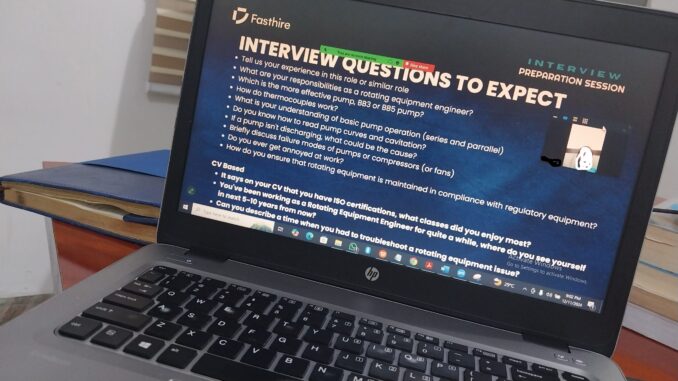
Top 10 Interview Questions for CBN, NNPC and Federal Government Jobs in Nigeria — With Sample Answers –
You have submitted your application, passed the computer-based aptitude test, and received that all-important invitation to appear for an interview. Congratulations — you are closer to landing a federal government job than most applicants ever get.
But the interview stage is where many qualified Nigerian candidates stumble. Not because they lack the knowledge, but because they have not prepared well enough for the types of questions they will face.
Government agency interviews — particularly at top-tier institutions like the Central Bank of Nigeria (CBN), NNPC Limited, FIRS, NPA, and the Federal Civil Service — are structured, competitive, and designed to test far more than just your technical knowledge. They test your communication skills, your understanding of the organisation, your leadership ability, and your character under pressure.
In this article, we break down the top 10 interview questions commonly asked at Nigerian federal government job interviews, along with sample answers and expert tips to help you walk into that interview room prepared and confident.
How Federal Government Job Interviews Work in Nigeria
Before we get into the questions, it helps to understand the format of a typical government job interview in Nigeria.
Most federal agencies use a panel interview format — you will sit before a panel of three to seven interviewers, often drawn from different departments within the organisation. Each panel member may ask questions related to their area of expertise or the general competencies required for the role.
At NNPC, for example, the panel is typically made up of five members who ask questions based on their departments. They score each candidate based on answers, presentation, and confidence. Glassdoor
Interview questions at federal agencies typically fall into four categories:
- Personal/motivational questions — Why do you want this job? Tell us about yourself.
- Competency-based questions — Tell me about a time you demonstrated leadership / handled a difficult situation.
- Technical/industry questions — What do you know about monetary policy? What is the current price of crude oil?
- Organisation-specific questions — Who is the current CBN Governor? What does NNPC stand for?
Also See: CBN Salary Structure
Top 10 Interview Questions
Let us now go through the ten most common questions — and exactly how to answer them.
Question 1: “Tell Us About Yourself”
This is almost always the opening question at any Nigerian government job interview. It sounds simple, but most candidates either ramble on for too long or give a vague, unprepared answer that fails to impress.
What the panel is looking for: A structured, confident, and relevant introduction that quickly tells them who you are professionally — not your life story.
How to structure your answer (the Past–Present–Future formula):
- Past: Your educational background and most relevant experience
- Present: Your current status and key skills
- Future: Why you are interested in this specific role and organisation
Sample Answer: “My name is Adaeze Okonkwo. I hold a First Class degree in Economics from the University of Nigeria, Nsukka, and I completed my NYSC service with the Federal Ministry of Finance in Abuja, where I was involved in budget analysis and data reporting. Currently, I work as a financial analyst at a private firm in Lagos, where I have spent the past two years building skills in monetary research and financial modelling. I am applying to the Central Bank of Nigeria because I want to contribute to macroeconomic policy at the highest level in this country, and I believe my background aligns strongly with what this role requires.”
Key tip: Keep your answer to two to three minutes. Do not mention your hobbies, family situation, or irrelevant personal details.
Question 2: “Why Do You Want to Work at [CBN / NNPC / This Organisation]?”
This question tests whether you genuinely researched the organisation or are just applying everywhere hoping something sticks.
What the panel is looking for: Evidence that you understand what the organisation does, why it matters, and how your goals align with its mission.
What NOT to say: Never say the salary is why you want the job. Stating salary as the reason would project you as someone in it only for the financial gain. This will almost certainly cost you the job.
Sample Answer for CBN: “I want to work at the Central Bank of Nigeria because it sits at the centre of Nigeria’s economic stability. The CBN’s role in formulating monetary policy, managing inflation, and regulating the financial system directly affects millions of Nigerians. I studied monetary economics and I am passionate about using data-driven analysis to inform policy decisions. Working at the CBN would give me the opportunity to make a meaningful contribution to Nigeria’s economic development at the highest institutional level.”
Sample Answer for NNPC: “I want to join NNPC because it is the cornerstone of Nigeria’s energy sector. I have followed the transition to NNPC Limited under the Petroleum Industry Act closely, and I am excited about the commercialisation reforms that are positioning it for global competitiveness. My background in petroleum engineering means I can contribute directly to the upstream exploration objectives of the organisation, while continuing to develop my professional skills in one of Africa’s most significant energy institutions.”
Question 3: “What Are Your Greatest Strengths?”
This is an opportunity to sell yourself — but it must be done with specific evidence, not empty self-praise.
What the panel is looking for: Honesty, self-awareness, and relevance to the role.
Sample Answer: “One of my greatest strengths is my ability to analyse complex data and translate it into clear, actionable recommendations. In my previous role, I was tasked with identifying cost inefficiencies in our departmental budget. I developed a new reporting model that highlighted areas of overspending, which helped reduce departmental costs by 22% over two quarters. I also believe my attention to detail is a genuine strength — in a regulatory environment like the CBN, accuracy is not optional, and I take that seriously.”
Key tip: Always back up a strength with a specific example. “I am hardworking” means nothing without proof.
Question 4: “What Is Your Greatest Weakness?”
This is one of the most dreaded interview questions — but it is actually an opportunity to demonstrate self-awareness and maturity.
What the panel is looking for: Honesty and evidence that you are actively working to improve.
What NOT to do: Do not say “I have no weaknesses” — this comes across as arrogant and dishonest. Do not say something that is actually a dealbreaker for the role (e.g., “I struggle with numbers” when applying to a finance role).
Sample Answer: “I used to struggle with delegating tasks. Because I care a lot about quality, I would sometimes try to handle too much myself rather than trusting colleagues with important work. I recognised this was limiting both my productivity and my team’s development. Over the past year, I have deliberately worked on this by setting clear delegation frameworks and building better communication with my team members. It has genuinely improved both my output and team morale.”
Question 5: “Tell Us About a Time You Faced a Difficult Challenge at Work and How You Handled It”
This is a competency-based question and is increasingly common at federal agency interviews, particularly CBN, FIRS, and NPA. It is designed to assess how you perform under pressure.
Use the STAR method to answer:
- Situation — What was the context?
- Task — What was your responsibility?
- Action — What did you do?
- Result — What was the outcome?
Sample Answer: “During my NYSC placement at the Federal Ministry of Finance, I was given responsibility for consolidating financial data from twelve state offices ahead of a quarterly report deadline. Two days before the deadline, three offices submitted incomplete data. Rather than waiting and missing the deadline, I contacted each office directly to understand the gaps, worked late two consecutive nights to reconcile the available data, and flagged the specific gaps clearly in the report with recommended follow-up actions. The report was submitted on time, the Director commended the transparency of the submission, and a new data submission protocol was subsequently introduced to prevent a recurrence.”
Question 6: “Where Do You See Yourself in Five Years?”
This question tests your ambition, self-awareness, and commitment to the organisation.
What the panel is looking for: Evidence that you are thinking seriously about your career and that you plan to grow within the organisation — not use it as a stepping stone.
Sample Answer: “In five years, I see myself having grown significantly within the CBN. I hope to have completed my professional certification with the Chartered Institute of Bankers of Nigeria and taken on increasing responsibility in monetary policy analysis. I would like to be contributing to research publications and possibly mentoring junior analysts within the department. My long-term goal is to reach a managerial level where I can help drive the CBN’s economic research agenda in a meaningful way.”
Never state that you intend to leave soon or consider the role as a stepping stone — the organisation will invest money to train and develop you and expects to benefit from your acquired skills and work experience.
Question 7: “What Do You Know About This Organisation?”
At federal government interviews, this question is almost guaranteed. It is a basic filter — candidates who cannot answer it clearly have not prepared and are unlikely to be taken seriously.
For CBN, key facts to know:
- Established in 1958, began operations on 1 July 1959
- Nigeria’s apex financial institution
- Responsible for monetary policy, currency issuance, and bank regulation
- Current Governor: Olayemi Cardoso (appointed 2023)
- Headquarters: Abuja
For NNPC Limited, key facts to know:
- Founded in 1977; converted to a limited liability company in 2022 under the Petroleum Industry Act
- Manages Nigeria’s oil and gas resources
- Current Group CEO: Bayo Ojulari (appointed 2025)
- Headquarters: Abuja, with zonal offices in Lagos, Port Harcourt, Kaduna, and Warri
- Operates refineries in Warri (125,000 BPD capacity), Kaduna (110,000 BPD), and Port Harcourt (210,000 BPD combined capacity)
For FIRS, key facts to know:
- Federal Inland Revenue Service — responsible for collecting taxes on behalf of the Federal Government
- Administers VAT, Company Income Tax, Petroleum Profits Tax, and other federal taxes
- Current Executive Chairman: Zacch Adedeji (appointed 2023)
Sample Answer (for CBN interview): “The Central Bank of Nigeria is Nigeria’s apex monetary authority, established under the CBN Act of 1958 and operational since 1959. Its core mandate includes maintaining monetary and price stability, issuing the naira, and supervising commercial banks and other financial institutions. The CBN also manages Nigeria’s external reserves and serves as the fiscal agent of the Federal Government. In recent years, the CBN has been actively implementing financial inclusion policies and digitalisation initiatives, including the eNaira. I am particularly interested in the CBN’s role in exchange rate management and inflation targeting, which aligns with my academic background in monetary economics.”
Question 8: “How Do You Handle Working Under Pressure or Meeting Tight Deadlines?”
Government agencies — especially revenue-generating ones like CBN, FIRS, and NNPC — operate in high-pressure environments with strict timelines. This question tests your ability to cope.
Sample Answer: “I work well under pressure because I believe the key is preparation and prioritisation. When I know a deadline is approaching, I break the task into smaller milestones and track progress daily. I also communicate proactively — if I foresee a potential delay, I flag it early rather than waiting until the last minute. During my time at [previous employer], we had a monthly statutory reporting deadline that was non-negotiable. I created a personal checklist system that ensured all inputs were gathered three days in advance, which eliminated last-minute scrambles and helped my team consistently submit reports on time.”
Question 9: “Describe a Time You Demonstrated Leadership”
Even for non-management roles, government agencies want to see leadership potential. This question often trips up fresh graduates who think they have no leadership experience.
Key insight: Leadership does not require a title. Think about group projects, NYSC community development projects, student union activities, or times you took initiative at work.
Sample Answer: “During my NYSC orientation camp, I was elected by my platoon as their representative to the camp management team. Our platoon was struggling with low participation in morning drills, which was affecting our overall camp assessment scores. I organised evening meetings with platoon members to understand the concerns, identified that the main issue was confusion about the timing schedule, and designed a simple daily notice system posted on the platoon board. Within one week, attendance improved significantly and our platoon moved from last to third position in the overall camp rankings. It taught me that effective leadership is often about communication and removing obstacles rather than giving orders.”
Question 10: “Do You Have Any Questions for Us?”
This final question is one most candidates waste — they either say “no” (which makes them look passive and uninterested) or ask something embarrassing like “what is the salary?”
Always prepare two or three thoughtful questions. This shows genuine interest and professional maturity.
Good questions to ask:
- “What does the onboarding and training process look like for new hires in this role?”
- “What are the key priorities for this department over the next twelve to eighteen months?”
- “What qualities do the most successful people in this role typically demonstrate?”
- “Are there opportunities for professional development and certification sponsorship within the organisation?”
Avoid asking about salary, leave days, or working hours at the interview stage — these are negotiated at the offer stage, not the interview.
Bonus: General Interview Tips for Nigerian Government Jobs
Beyond preparing your answers, these practical tips will help you perform at your best on interview day:
Dress appropriately Wear formal business attire — a well-ironed suit or smart corporate outfit. First impressions matter enormously in government agency interviews. Conservative colours like navy blue, black, grey, and white are safest.
Arrive early Plan to arrive at least 30 minutes before your scheduled interview time. Traffic in Abuja and Lagos is unpredictable. Arriving late to a government job interview is almost always disqualifying.
Bring your documents Carry originals and photocopies of all your certificates — degree, NYSC discharge, O’Level results, NIN slip, and any professional certifications. Many agencies conduct document verification on the same day as the interview.
Speak clearly and confidently Maintain eye contact with the panel, speak at a moderate pace, and avoid filler words like “em,” “uhh,” and “you know.” If you do not understand a question, politely ask for clarification — this is far better than guessing and giving an irrelevant answer.
Follow up After your interview, send a brief, professional follow-up email to the HR contact thanking the panel for the opportunity. This small gesture is rare among Nigerian applicants and can leave a positive lasting impression.
Frequently Asked Questions
How long do CBN and NNPC interviews typically last? Panel interviews at major federal agencies typically last between 20 and 45 minutes per candidate. Group assessment exercises, where used, may take half a day or more.
Can I negotiate salary at a government job interview? Government agency salaries are largely structured and non-negotiable at entry level. Focus on demonstrating your value during the interview rather than discussing compensation.
What happens if I fail the interview? Most federal agencies allow candidates to reapply in subsequent recruitment cycles. Use the experience to identify gaps in your preparation and come back stronger.
How soon after the interview will I receive feedback? The hiring process at NNPC takes an average of approximately 79 days from application to hire. CBN and other agencies have similar timelines. Patience is essential — federal hiring is methodical.
Final Thoughts
Landing a federal government job in Nigeria is a competitive process, but it is absolutely achievable with the right preparation. The candidates who succeed are not always the most qualified on paper — they are the ones who prepared thoroughly, communicated confidently, and demonstrated genuine knowledge of and passion for the organisation they were applying to.
Study the ten questions in this guide, practise your answers out loud, and walk into that interview room knowing you are ready.
Bookmark careersnews.com.ng for more interview guides, aptitude test preparation tips, and the latest recruitment news for Nigerian job seekers in 2026.
Disclaimer:
This article is for career preparation purposes only. Interview formats and questions vary by organisation and recruitment cycle. Always research the specific agency you are interviewing with using official sources.
Leave a Reply